
Abundanceor Collapseby Farzad Mesbahi — The Farzad Book on AI, Robotics, and Civilization
The Fork in the Road for AI, Robotics, and Civilization
A book by FARZAD
“”
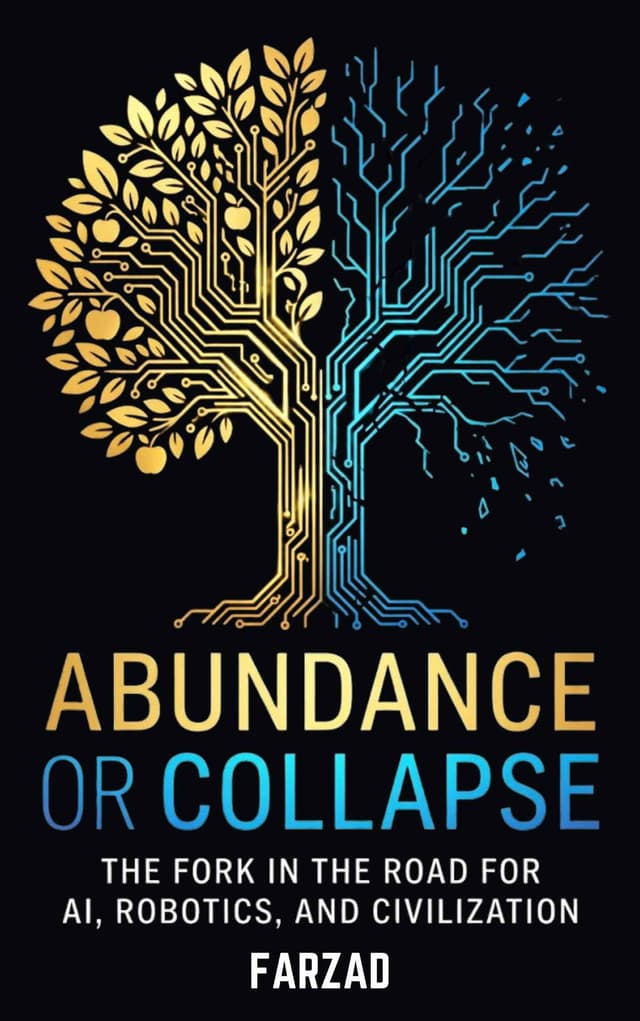
AI, robotics, and energy aren't three separate revolutions — they're one interconnected system reshaping civilization. After 1,700+ YouTube videos and four years at Tesla, Farzad wrote the book on what's coming, who wins, who loses, and what you can do about it.
What readers
are saying about the book
“AI, robotics, and energy converging into one massive flywheel — presented with remarkable clarity. Feels like a conversation with a knowledgeable friend, not a dense treatise. A practical framework for what's coming.”

Nick W.
Verified · Kindle
“Well thought out, well researched by an insider who truly understands what is going on in the AI and robotics space. Farzad connects the dots between Tesla, autonomous driving, and the broader energy revolution in a way that no one else is doing right now.”

Hugh Harrison
Verified · Kindle
“Concise and powerful. This book genuinely shifted my perspective on what the next decade looks like. The Barbell Effect framework alone is worth the read — it made me rethink how I'm positioning my career and investments for what's coming.”

Greg Burton
Verified · Paperback
“A strong debut — clear, urgent, and genuinely useful. Its greatest strength is bridging insider technical insight with personal strategy. A concrete map for the fork ahead, and the reason this book matters.”

Jimmy Brennecke
Verified · Kindle
What You'll Learn
Six frameworks from the book.
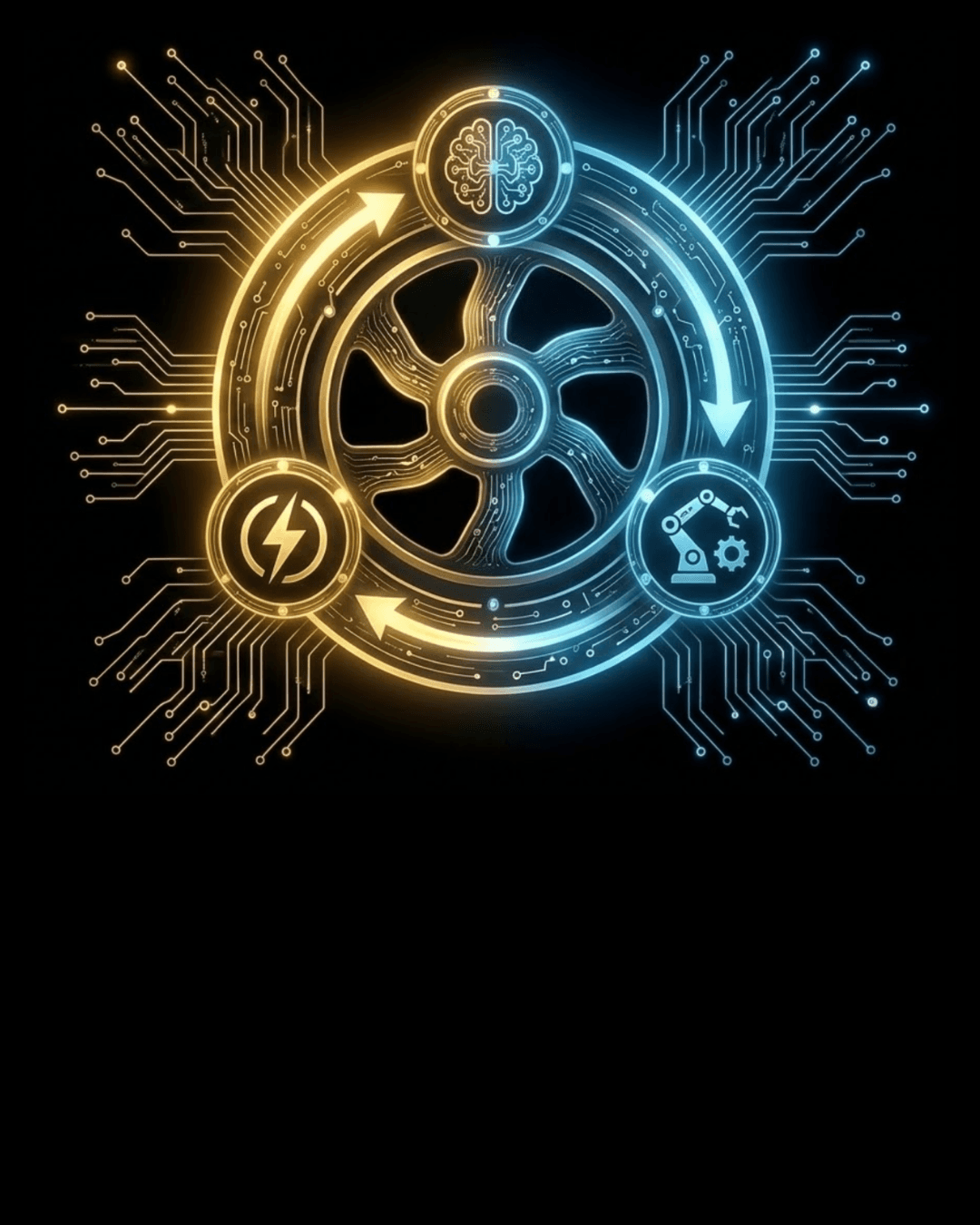
The Convergence
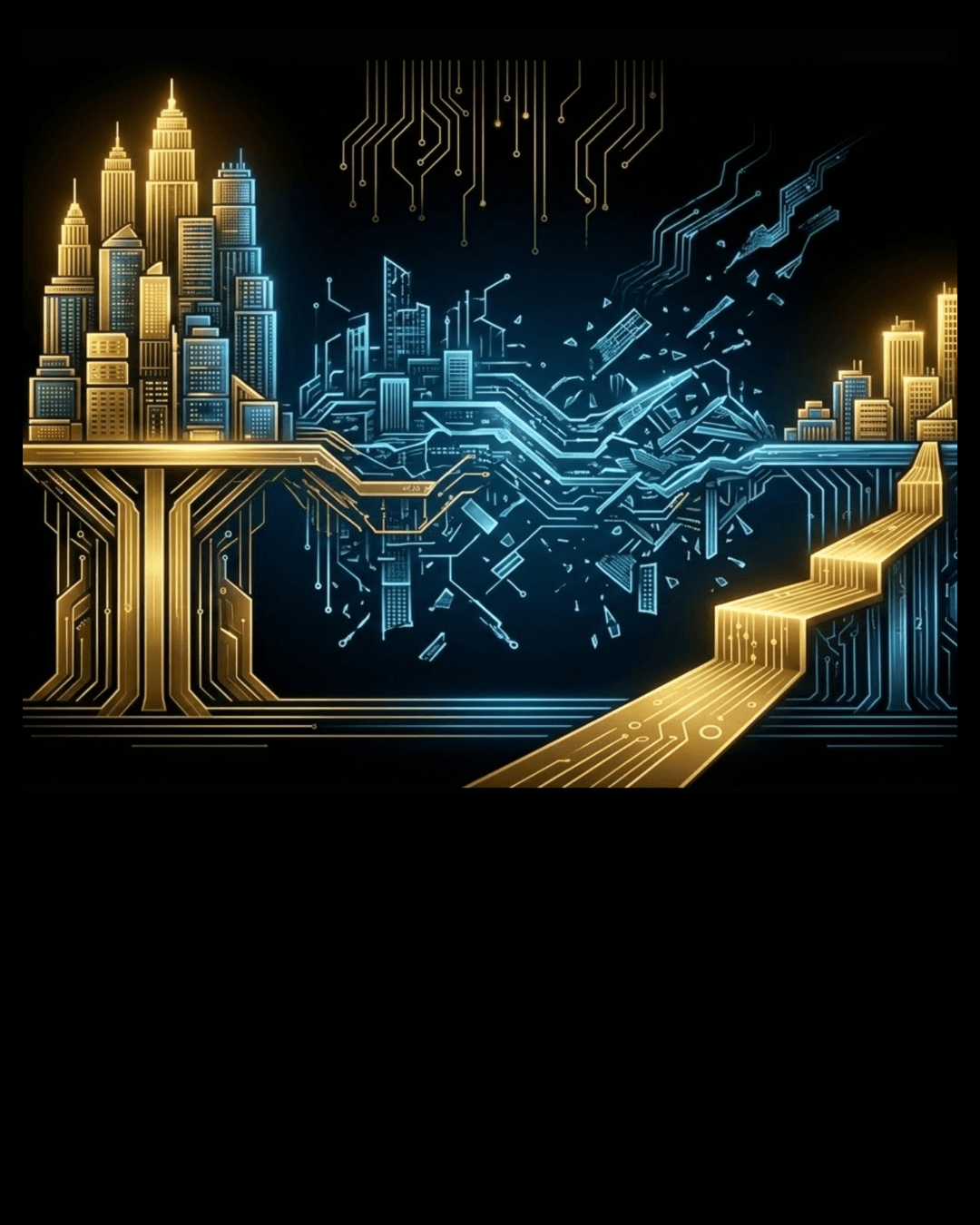
The Barbell Effect
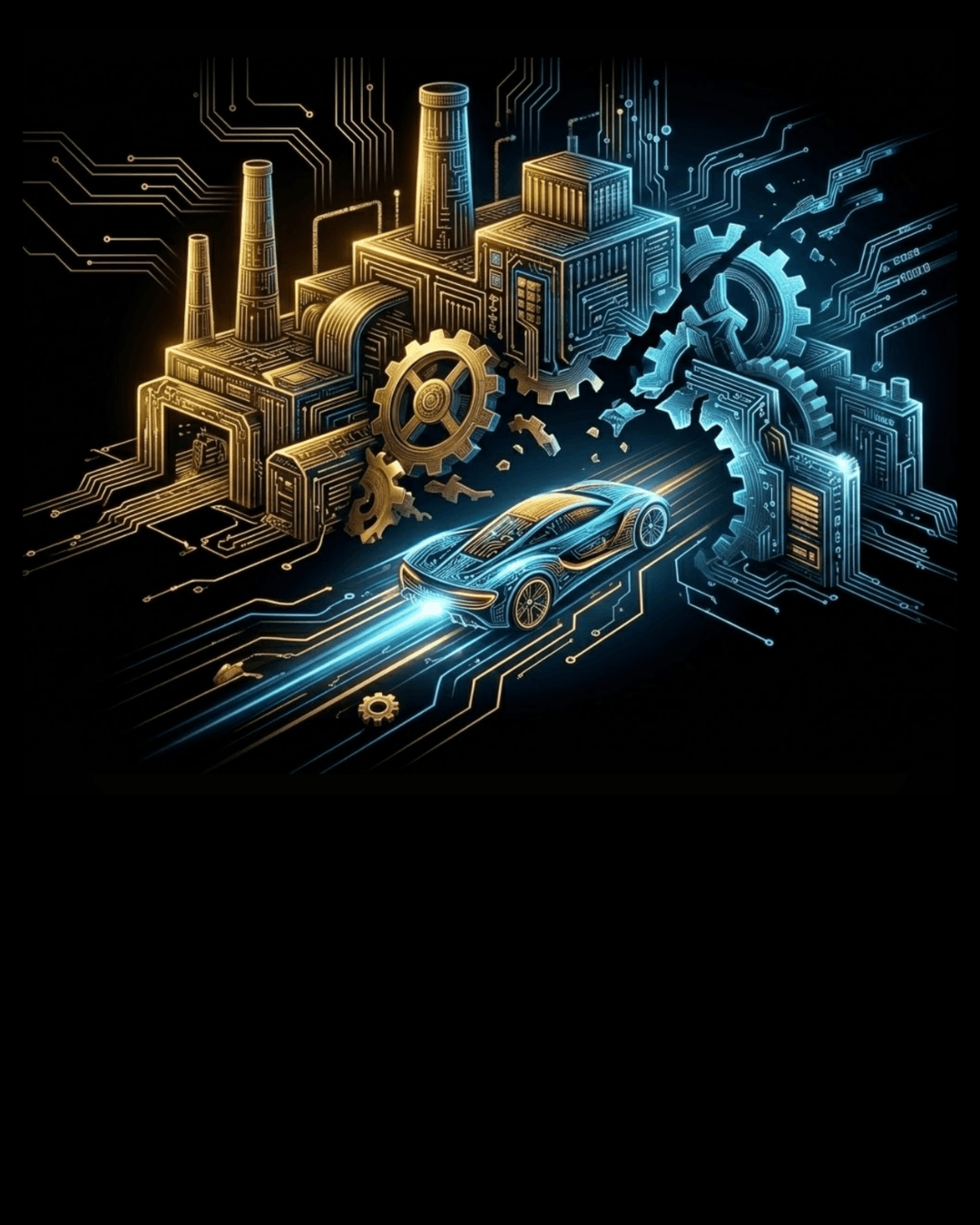
The Innovator's Dilemma
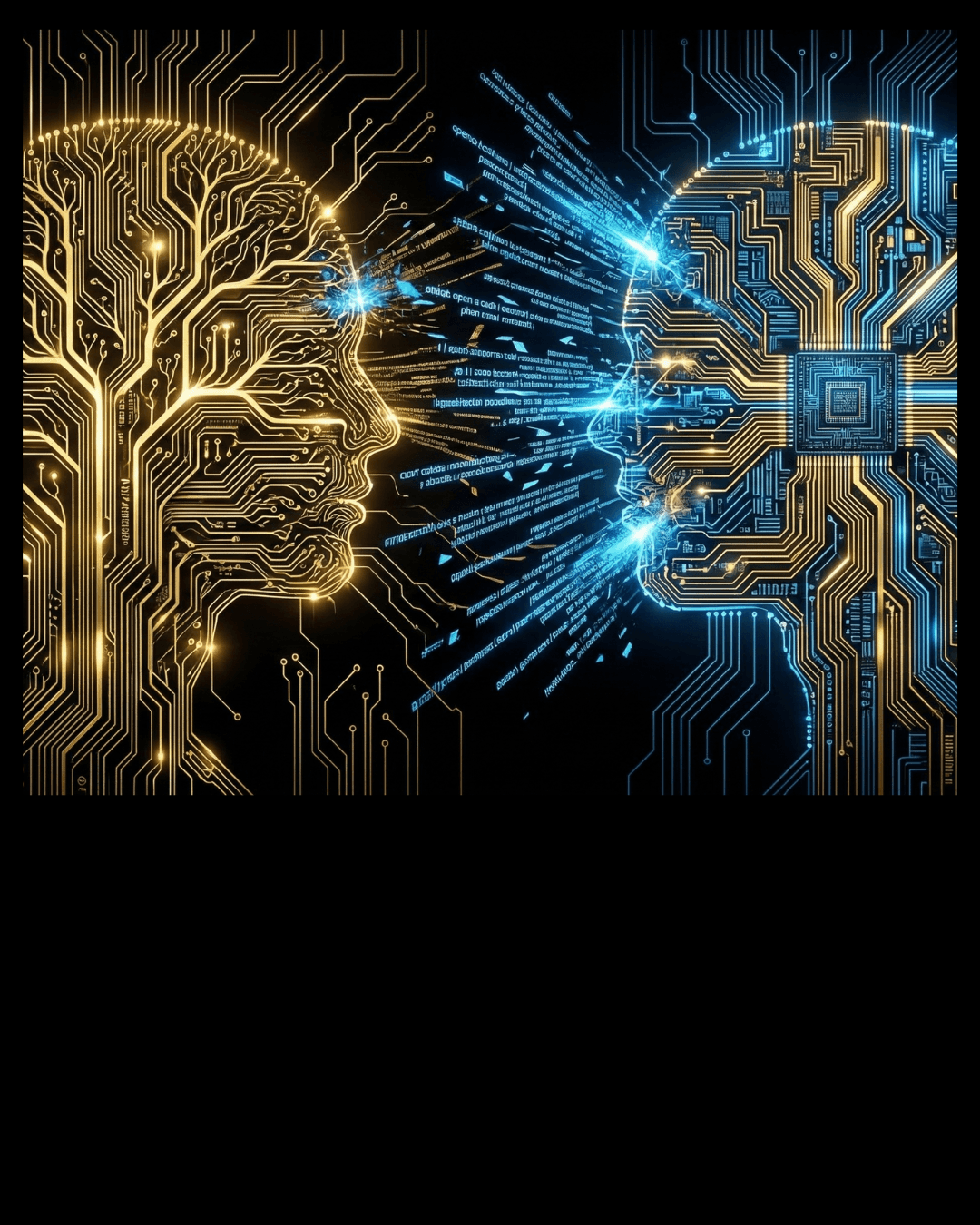
US vs China
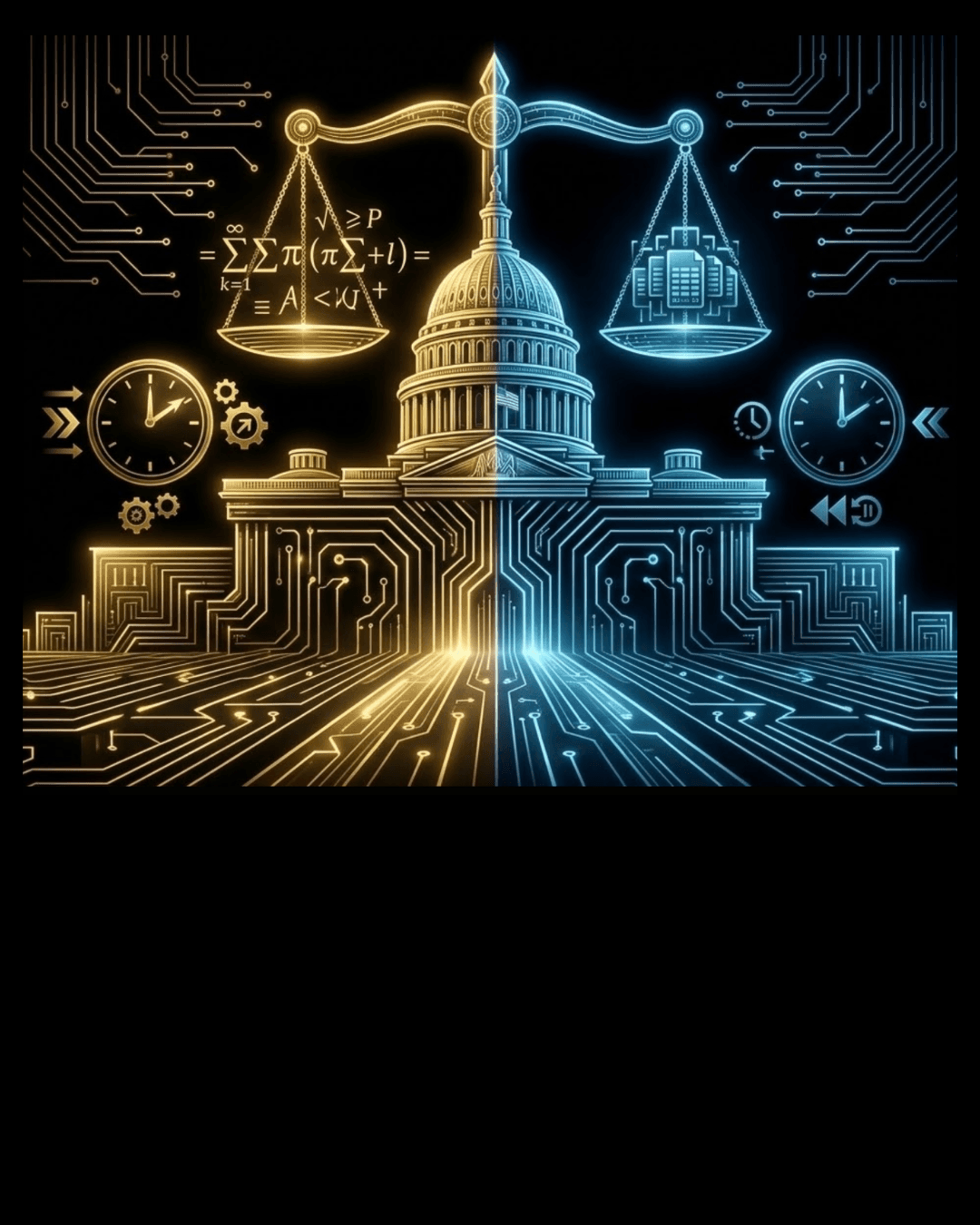
What Government Must Do
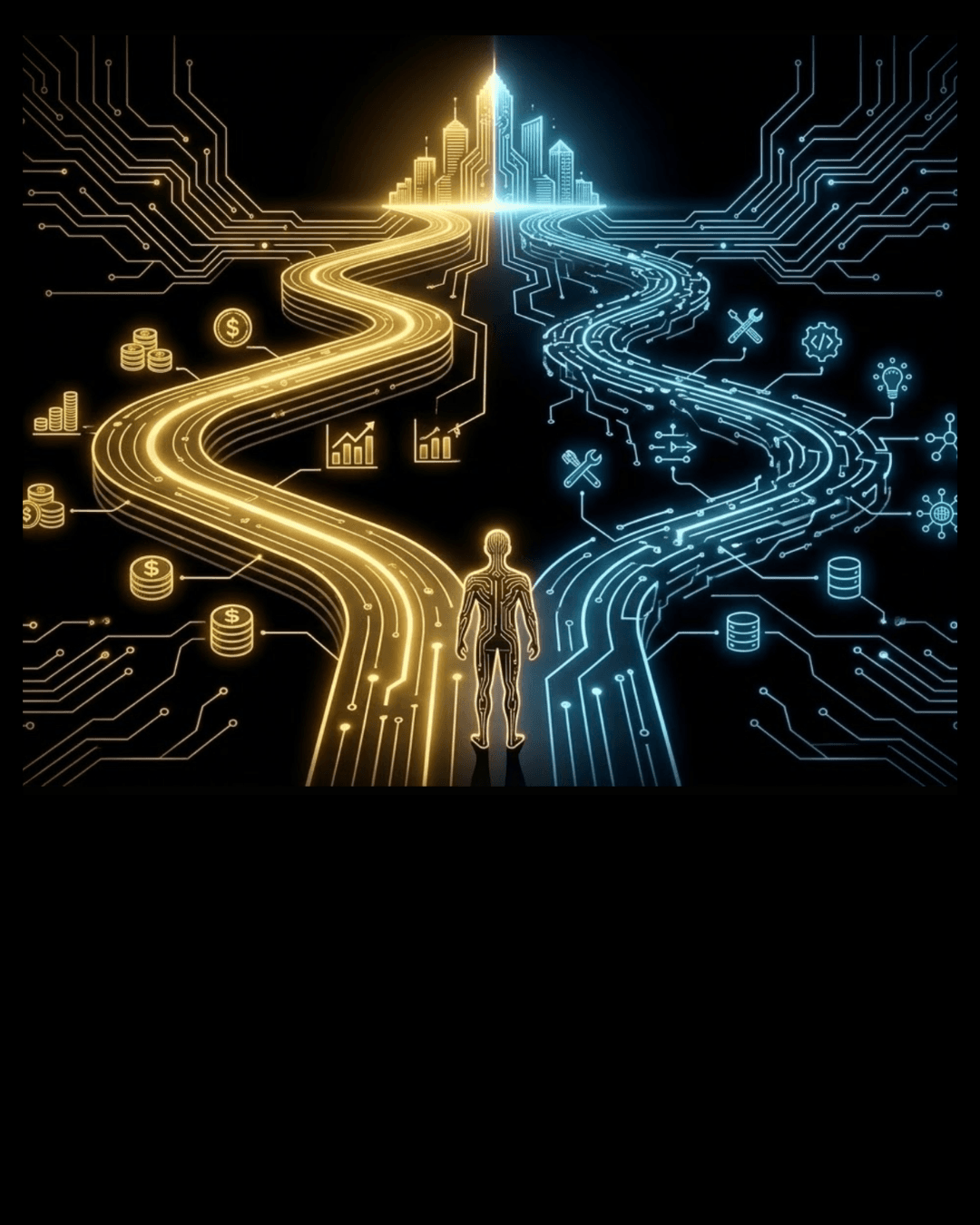
Your Personal Roadmap
The Convergence
AI, robotics, and energy form a self-reinforcing flywheel reshaping civilization faster than anything in human history.
The Barbell Effect
Top 20% thrives, bottom 20% lifted up, middle 60% faces disruption worse than the Great Depression.
The Innovator's Dilemma
Legacy automakers, banks, and entire industries are structurally incapable of surviving what's coming.
US vs China
Why winning the AI race is existential, and how China's open-source strategy is economic warfare.
What Government Must Do
Pro-regulation, anti-slowdown. UBI is inevitable — the math demands it. But will they act in time?
Your Personal Roadmap
Strategies for positioning yourself — whether you have capital or you're starting from zero.
Who This Book Is For
Select your path. See what the book offers you.
You have capital — or plan to — and want to know where to deploy it before the window closes.
A four-criteria investment framework, the Data Moat Principle, and why benchmarks are useless for evaluating AI companies long-term.
The companies that will dominate the next decade are being decided right now. Most investors are using the wrong criteria. This book gives you the right ones — before it's too late.
Explore the Chapters
12 chapters. 3 parts. Click any chapter to learn more about the book.
The Convergence
AI, robotics, and energy aren't three separate revolutions — they're one interconnected system.
Read full chapter →Full Self-Driving and the Death of Human Drivers
FSD is the proof of concept. The first massive demonstration that AI can replace human labor at scale.
Read full chapter →Optimus and the $40 Trillion Labor Market
The global market for human labor is $40+ trillion per year. Humanoid robots are coming for a piece of it.
Read full chapter →Energy Abundance — The Forgotten Third Leg
The most overlooked aspect of the entire AI story. Massive energy demand unlike anything we've ever witnessed.
Read full chapter →The Barbell
Picture a barbell at the gym. That is the economic shape AI is creating — and almost nobody sees it coming.
Read full chapter →The Innovator's Dilemma at Global Scale
They died because the structure of their businesses made it impossible to respond.
Read full chapter →US vs China — The Race That Matters
AI in the hands of a democratic society vs an authoritarian regime. The stakes couldn't be higher.
Read full chapter →What Government Must Do (And Probably Won't)
Pro-regulation but anti-slowdown. Most people think these are the same thing. They're wrong.
Read full chapter →The Transition Nobody's Preparing For
The agent revolution is already here. The window for preparing is now — not when the disruption is obvious to everyone.
Read full chapter →The Investment Framework
The best investments look crazy at the time. Four criteria, all must be present.
Read full chapter →The Data Moat Principle
Benchmarks are useless long-term. Proprietary data that compounds — that's the only real moat.
Read full chapter →Your Personal Roadmap
You have 2-5 years to reposition. Not 10. Not 20. Two to five.
Read full chapter →Behind the Book
A decade of research, 1,700+ videos, and one interconnected thesis — distilled into 229 pages.
The Thesis
The book opens with The Convergence — the central framework arguing that AI, robotics, and energy are not three separate revolutions but one interconnected system accelerating together. Each breakthrough in AI makes robots smarter. Each improvement in robotics drives down energy costs. Each energy breakthrough fuels more compute. The flywheel is already spinning.
From there, Farzad breaks down Full Self-Driving and the death of human drivers, Tesla's Optimus humanoid robot and the $40 trillion global labor market it targets, and the energy revolution most investors are still ignoring — including Tesla Megapack, Wright's Law on battery costs, and why solar wins long-term.
Who Wins, Who Loses
He introduces The Barbell Effect — his framework for who wins and who loses — arguing the top 20% thrives, the bottom 20% gets lifted up as AI drives down costs of basic needs, but the middle 60% faces disruption worse than the Great Depression. Routine knowledge work, traditional white-collar jobs, and entire professional categories will be fundamentally reshaped within 5–10 years.
The book also covers the Innovator's Dilemma at global scale — why legacy automakers like GM, Ford, and Stellantis, along with banks and entire industries, are structurally incapable of surviving what's coming. It examines the existential US vs. China AI race, China's open-source strategy as economic warfare, what governments must do and probably won't, and the transition nobody is preparing for — including the 70–80% chance of massive social unrest.
Your Roadmap
The final section shifts from analysis to action. A four-criteria investment framework for evaluating AI-first companies. The Data Moat Principle — why proprietary data that compounds over time is the only durable competitive advantage in the age of AI, and why benchmarks are meaningless. Tesla's billions of miles of real-world driving data is the prime example, but the principle applies across every industry.
And a personal roadmap: concrete strategies for positioning yourself — whether you have capital to deploy aggressively into AI-first companies, or you're starting from zero with nothing but free AI tools and a willingness to build. The window is 2–5 years. The book explains exactly why and what to do about it.
Farzad
Mesbahi
Technology analyst. Content creator. Tesla investor since 2012. Former Tesla employee. The Farzad book — Abundance or Collapse — is his first.
Farzad Mesbahi is a technology analyst, content creator, and author focused on the convergence of artificial intelligence, robotics, and energy. He has been a Tesla investor since 2012 — before Model S deliveries began — and worked at Tesla from 2017 to 2021, giving him both a long-term investor's conviction and an insider's understanding of how the company actually operates.
With over 1,700 YouTube videos published on his channel and a combined reach exceeding 700,000 across YouTube and X (formerly Twitter), Farzad has built one of the largest independent audiences covering Tesla, Full Self-Driving, the Robotaxi opportunity, Optimus humanoid robotics, energy storage economics, and the broader AI revolution. His analysis spans autonomous driving, the $40 trillion global labor market, battery cost curves, the geopolitical AI race between the US and China, and the social upheaval most people aren't preparing for. His content is known for connecting dots across industries that most analysts treat in isolation.
Abundance or Collapse: The Fork in the Road for AI, Robotics, and Civilization is his first book — a distillation of over a decade of research, real-world experience inside Tesla, and thousands of hours of public analysis into a single, actionable framework for understanding the most consequential decade in human history.
Why This Book
Most books about AI are written by academics who've never built a company, or by journalists parachuting into a story they'll move on from in six months. Farzad's perspective is different. He's been an investor through Tesla's most volatile years, worked inside the factory, and spent nearly a decade publicly analyzing every development in autonomous driving, humanoid robotics, and AI infrastructure — in real time, on camera, with receipts.
That combination — investor, operator, and analyst — shapes every chapter. The book doesn't just explain what The Convergence is. It explains what it means for your career, your portfolio, and your family. It names who wins (capital owners, builders, risk-takers), who loses (the complacent middle), and provides a concrete personal roadmap for repositioning before the window closes — whether you have capital or you're starting from zero.
Farzad holds strong positions: Tesla is the central proxy for The Convergence. Legacy automakers are toast. Uber is cooked by Robotaxi economics. The US must win the AI race against China or face existential consequences. He steel-mans the bear cases too — AI progress could plateau, regulation could slow deployment, protectionist backlash could set things back, and he could simply be wrong. But he doesn't think he is. The book explains why.
Questions
about the book
Everything you need to know about Abundance or Collapse by Farzad Mesbahi — the Farzad book on AI, robotics, and civilization.
Farzad Mesbahi's book on The Convergence — the idea that AI, robotics, and energy are not three separate revolutions but one interconnected system reshaping civilization. It covers Full Self-Driving, Tesla's Optimus humanoid robot, the $40 trillion labor market, the Barbell Effect, the US vs. China AI race, and a personal roadmap for positioning yourself before the window closes.
Technology analyst, content creator, and author. Tesla investor since 2012 — before Model S deliveries began. Former Tesla employee (2017–2021). Over 1,700 YouTube videos published, with a combined reach exceeding 700,000 across YouTube and X. Abundance or Collapse is his first book.
Yes. Free PDF and free ePUB downloads are available on this page — no email required, no paywall. The book is also available on Amazon in Kindle, Paperback, and Hardcover editions.
The central thesis of the book. AI makes robots smarter. Smarter robots deploy energy infrastructure faster and cheaper. Cheaper energy powers more AI compute. The cycle accelerates. Unlike previous technological revolutions, AI can participate in its own improvement — the steam engine couldn't redesign itself, but a robot running AI can.
Farzad's framework for who wins and who loses. The top 20% — capital owners, builders, risk-takers — thrive as AI becomes an incredible force multiplier. The bottom 20% are lifted up as AI collapses the cost of basic needs. The middle 60% faces the worst disruption: routine knowledge work, white-collar jobs, and entire professional categories reshaped within 5–10 years.
No.
229 pages, 12 chapters, organized in 3 parts: Part I: What's Coming (The Convergence, FSD, Optimus, Energy), Part II: The Stakes (Barbell Effect, Innovator's Dilemma, US vs. China, Government, The Transition), and Part III: What to Do (Investment Framework, Data Moat Principle, Your Personal Roadmap).
The Convergence moves at its own pace. · The Convergence moves at its own pace. · The Convergence moves at its own pace. ·
The Convergence moves at its own pace. · The Convergence moves at its own pace. · The Convergence moves at its own pace. ·
The only question is whether
you're on the right side of it.